Showing posts with label Business. Show all posts

Monday, October 20, 2014

Business/Entrepreneur: Do NOT cut corners


One of the most valuable lessons I've learned in my life is: Do not cut corners in anything you do that is of value to you, whether it is in business, relationships, or personal.  I can remember going through college (undergrad) and just coasting along -- essentially "cutting corners" -- not giving it 100% and thinking once I graduate things will just fall into place.  Yeah, well that is not how life works nor should it.  The same goes for business.  Let's say you want to start your own business or work for a company that is: A) just starting out or B) has been around for a while but is struggling to maintain a profit.  What do they all have in common (typically),  limited access to money, resources, and human capital, right?  So what is the typical answer to this issue?  Free work!  Free software! Free whatever!


In the modern, digital world we have these expectations that things should be free -- everything from information to education, tech-platforms, and applications.  In some instances this is true and many free pieces of information, technology and applications can be beneficial and useful when operating a business, and should be leveraged.  Some products/services that come to mind are: Wix.com, Google Docs/Drive, Skype, Zenefits, Social Media Channels (Hootsuite, Facebook, LinkedIn, Twitter, Pinterest, etc.),  Blogs, Dropbox -- there are many more either free or affordable platforms and software one can use to enhance their business operation and market penetration.  Someone can even take FREE classes online at MIT, Stanford, and Yale if they were feeling ambitious -- doesn't mean you'll get a degree from said school or even finish the class.  These are all good, positive and productive ways to cut costs and improve efficiency at the same time; however, there are areas where "cutting corners" in business can be a detriment, completely destroy what you sought out to build, and make all the hard work and time you've invested up to that point a waste.  Many of these examples of cutting corners have been commonplace over the last 30 or 40 years, but are no longer viable for various reasons.


The first of which is free employment or un-paid internships.  Don't get me wrong, I am all for the internship position and believe there can be value created for both the intern and the company as long as it is the right fit.  The right fit would be an intern that is passionate about the industry, wants to learn, grow, and contribute; work hard with the intention to further their career, build a valuable skill-set that cannot be learned in a classroom; and understands the outcome prior to starting (e.g. college credits, 3 month trial period, possible employment when internship is fulfilled, pay or no pay, etc.).  The company must be honest from the jump of their intentions, the duties expected to be performed, challenge critical thinking skills of the intern -- not just have them get coffee or take out the trash; communicate clearly its intentions, the duration, and the possible outcomes.  Nothing is worse than a company that offers an internship to a high-performing individual that is expecting to work for 3 months and then either be brought on full/part time (paid) or after the 3 months move on with a great learning experience and professional references.  I have a theory I like to promote to businesses that act unethically and manipulate free work to benefit themselves, and that is: If you cannot afford to pay someone what they are worth, or close to it, to perform their duties at a high-level (after discussed duration of internship is up) then you'll have to find someone else whom may or may not be as efficient and productive as the last, thus potentially wasting more time and money.  Or you'll have to perform the duties yourself, chances are you won't have the time nor the technological knowledge.  Or you can try to automate some of the tasks (costs more upfront).  If none of the above are feasible, it may be time to reevaluate your business model and ask yourself, why your company is failing to move forward and increase revenues and market share.  As the old saying goes, "It takes money to make money."


The second example of cutting corners in business that will most certainly end up costing you more in the long-run would be to not invest in your product/service offered.  In today's global market place, consumers are extremely informed, transparency is on the up-swing, competition is fierce, and everyone has a voice (social media).  What does this mean for businesses? Well, it means an inadequate products/services will not last nor will it be profitable, particularly when starting/launching a new product/service.  We all know about the endless recalls from major car manufactures from Toyota to GM, which can be viewed as cutting corners in the manufacturing costs; however, while it is still damaging to their brands, they have the longevity, capital, and loyalty to overcome something as catastrophic as recalling millions of cars.  This is not something a new start-up or SMB can sustain, as a matter of fact, the product/service should be your primary focus when building your business model, as it is the major factor that will separate you from your competitors and enable sustainable growth.   We've all seen, owned, or worked at a company where their mentality is to invest as little as possible into their product in order to maximize the salaries at the top.  Well, that may work in the short-term, however, in the long-term they are setting their businesses up to fail, and they most likely do within a few years, without an attempt to correct the quality of their product/service.  Bottom line, invest in quality, you will not be disappointed.
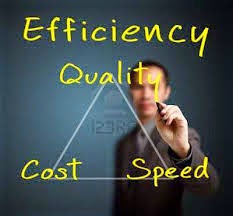

Another tried and true example of cutting corners in business that will most certainly end in demise at some point is to under pay your employees and/or not offer perks to supplement lack of salary.  As I have written in the past, the most valuable asset to a company, particularly a start-up or SMB is its team.   In a highly competitive work environment, competition for top-level talent is fierce and the ability of a company to attract and retain such talent is mandatory in order to remain competitive and innovative across all industries.  The age of technology has changed the way business gets done: increasing productivity and efficiency.  Let's face it; a highly efficient and competent individual can essentially perform the duties of 5 or more people from 10 or 20 years ago.  So how does a business owner retain and attract a high-level individual -- through either a high salary, perks, flexibility, equity, or a combination of.   When business owners fail to address/offer any of the aforementioned, they will experience a high turnover rate, inefficiencies in the the day-to-day operations, lack of motivated employees, the inability to attract and retain top performers, and the list goes on and on; all of which end up costing the company heavily in the long-term.  A truly sustainable and viable business should have no problem attracting and retaining the best talent possible, which is relevant to each company's specific needs.  Just to give a quick example: Let's say you have a new tech start-up and you are looking for a top programmer for your new app, the question you should be asking yourself is what can I offer to lure him/her away from Apple or Google?  I know I can't offer a salary anywhere close to Google or Apple, but maybe I can offer equity and flexibility?  Money is not the be all end all when it comes to job satisfaction, at least not to the extreme as in the '80s -- thinking "Wall Street".

Cutting corners may sound like a good idea in the short-term; however, the long-term outcomes are typically not positive and prove to be quite costly.  As a start-up entrepreneur or small to mid-sized business owner, it is important to understand your business, your competition, the macro/micro environment, and your long-term growth strategy.  The goal of your business should not be to make money, but to create value in the market place, provide superb customer service, and build the best team possible -- making money will come as a result.  It can even be wise to ask yourself, instead of where can I cut costs; what areas can I improve to make the business run more efficiently?  The old school way is to find areas to cut, the new school way is how to maximize efficiency and productivity.  Thanks technology!

As always, I'd love to hear your comments and thoughts on this topic.

If you are in need of any business and/or marketing consultation, feel free to shoot me a brief introduction note at: modernbizstraetgy@gmail.com.

Cheers,

ModernManTellsAll


Enter your email address:


Delivered by FeedBurner


Wednesday, October 8, 2014

Business/Marketing/Lifestyle: Take risks...


I know, I know. This is contrary to what your (and my) mom taught you and probably tells you to this day, but I'm going to tell you -- take RISKS! Take risks in business, in marketing, in life, and everywhere in-between. I'm not saying do something completely stupid, and let's say, jump off a sheer cliff with out a parachute or safety apparatus, or drive 100mph down the 101. I'm saying take (calculated) risks, get out of your comfort zone, grow, learn, meet people, and do it while you can. Do it before getting out of bed to fast or walking to the bathroom unassisted becomes a risk. I am being a bit humorous here, but it's true, life moves fast and if you ask your grandparents, or parents for that matter, what they regret the most, more often than not it's the things they didn't do. So, the moral of this (blog) story is to take risks, assess the situation, do a thorough analysis -- is it worth it? What are the benefits? What are the costs and potential consequences? What is the likelihood of coming out on top? Whatever you do, don't become complacent -- keep moving forward, innovate, disrupt, become a better person, more informed, more educated -- be the best at what you do, and who you are.
Take risks in Business:
It is a known fact that we are now operating in a global economy -- competition is fierce, buyer behavior has changed, large corporations no longer have a dominant grip on the market, technology is affordable and accessible to all, I can go on and on. So how does a company (maybe yours) standout and capture a profitable share of the market? By taking risks! No longer is the "old way" of doing business a viable option. Businesses must step out of their comfort zone and become innovators and disruptors. Innovation does not have to be some radical, technological advancement, nor does it have to come with a significant amount of capital investments. It can be as simple as offering a product/service in a better more efficient way than the competition; or it can be a minor incremental innovation to an existing product/service. It can also be a change in company culture or something as simple as hiring an individual that does not necessarily have the same background as everyone else -- diversification. Taking risks in business should always be calculated and well thought out through thorough market research and quantitative and qualitative data analysis. A few companies that either are or have taken significant risks are: Tesla, Virgin, Zappos, Apple (Steve Jobs era), and Netflix; all of which have or are changing the way we think and interact in our day-to-day lives. The two major things that they all have in common are great leaders that believe in what they are doing and have entrenched a culture that curates this behavior. After all, consumers really have no idea what they want.
"If I had asked people what they wanted, they would have said faster horses." ~ Henry Ford
Take risks in Marketing:
I have written about how to standout amongst the marketing clutter in the past, however, having just read the Fast Company article "This Company's Brilliantly Sassy Branding Strategy Makes Yours Look Sad And Boring" by Elizabeth Segran, I was inspired to write about the importance of taking risks, particularly in/with Marketing. The article goes into the branding strategy of a privately owned small business called, Manhattan Mini Storage (MMS), and how their messaging is pushing boundaries to the point where it can sometimes be seen as offensive to certain demographics. It is really a great read, and aspiring to a marketing guru such as myself.
The majority of brands (small and large) are afraid to take a chance and go with out of the box messaging to attract attention and capture market share. In reality, this strategy is ideal in today's super saturated and hyper digital world, where we (the consumer) are exposed to 1000s of messages/posts a day! So you offend some people that are not in your target demographic -- no big deal, as your target will appreciate your honesty and more often than not, will become even more loyal to your brand. After all, even the bad press will attract others in your target market that otherwise may not be aware of your product/service, like myself as I have never heard of MMS. This is especially true in today's polarized world. Take a stand for what you believe in and let people know what your brand is about, be honest, push some boundaries, shake things up, and most importantly, OWN IT.
Those of us in California know all about the Carl's Jr. commercials. They pretty much said, screw it, everyone else is pushing towards the health conscious movement, with conservative, family oriented content -- not Carl's Jr. They are going right for the 18 - 30 year old male demographic, with no shame -- head down and charging. Is it working? Can't say for sure, however, I would bet if it is working, it is solely due to the fact that they have committed to it and are owning it.
Take risks in Life:
The same principals for taking risks in business and marketing can be applied to life. Let's face it life is short! If you feel as if you need a change and are contemplating your decision, evaluate the positives and negatives, and if they weigh out -- do it! Yes, it can be overwhelming or scary at first, leaving your friends and family behind, etc. However, if you don't take that risk and go all in, chances are you'll regret it. If you don't believe me, ask your elders, I guarantee they will say go for it! There are countless articles out there, blogs, etc., that speak on this so I'm not going to elaborate further, but it is a fact. Risks in life can be anything as simple as going after the girl you want, telling someone how you really feel, getting a new pair of glasses, meeting new people, trying a new food to more risky: a career change (not an easy decision, believe me), furthering your education (best thing I've done), moving out of your hometown (not that bad), skydiving (on the agenda), starting your own business (stay tuned), having kids (maybe), etc. Bottom line is, when you make the decision to take the risk, go for it, jump in with both feet and give it all you got -- things have a way of working out as long as you commit to it. I'm not sure who says this (I could look it up but...), "You get out of life what you put into it."
As always, I'd love to hear your comments on this topic, so please leave comments if you desire.
PS - If you are in need of any Business and Marketing consultation for your small to mid-sized business/start-up feel free to shoot me an email at: modernbizstrategy@gmail.com.

Cheers,
ModerManTellsAll


Enter your email address:


Delivered by FeedBurner

Wednesday, October 1, 2014

Marketing: Google AdWords and increasing your ROI


Most companies, marketers, and consumers for that matter, are aware of Google (67.6% market share) and use it daily to perform searches, look up content, find informative articles and blogs, and to buy and sell products/services.  For this blog post I will be focusing specifically on the seller side, and how companies and marketers are utilizing Google AdWords ineffectively and are wasting/losing a significant amount of capital.

The scramble is on, and has been for the last 10 years or so, for companies to create and build an online presence.  In today's world it is absolutely essential to have at least a company/business website where potential consumers can find you and get an idea of what your brand is all about and what you are offering as far as products/services.  With millions of websites now online, how does one standout and get noticed?  One way is to type your exact web address into the url search, which only works if consumers are aware of your company and have, more than likely, purchased from your business in the past.  The other way, and most common, is through the Google search, where consumers type in keywords, usually two to four words, into the search bar.   Once the keywords have been typed the Google search page is populated with data - listing ads from a variety of companies that fit the search criteria.  If your company is not listed on the 1st page, where 75% of people do not go past, you are essentially throwing your money into a black-hole.  If this is the case I would recommend pausing your campaigns and read the following 3 steps prior to reactivating them.

1) Conduct a thorough keyword analysis:

In my experience this is the most common mistake companies and marketing managers are making and the easiest to fix.  That said, it is probably the most important as well.  When conducting your initial keyword analysis it is important to know your industry and target consumers.  Once you have done the preliminary research you can access Google AdWords keyword planner function.  From here you can type in industry related keywords and AdWords will perform a search and populate 100s sometimes 1000s of potential keywords with key metrics such as competition, avg. monthly searches, suggested bid, impressions, etc.  Granted many are far too broad to use in a campaign (not recommended), however, there will be many options to choose from and further target your search.  When keywords are too broad your ad(s) will show in searches, which may not be your target market.  Therefore causing people to click on your ad with no intent to buy, meanwhile you will be charged on your CPC (cost per click) campaign -- lowering your ROI.  There are many advanced features in the keyword planner as well that can increase keyword efficiency: Search competitor websites, landing pages, trends, etc.  However, the basics are the most important to get right -- then worry about advanced features.  Once you have selected your top 20 or so keywords you'll want to utilize AdWords match function: Broad, Phrase, and Exact are the basics.  If you are very confident a selection of keywords match what the majority of your consumers will be searching for, then you'll want to use either phrase or exact match, thus targeting your prototypical consumer, whom are more likely to convert on your site.


Helpful hint: You can use a combination of the three in your Ad Groups

2) Organize Ad Groups:

Organizing your Ad Groups is highly recommended.  I have seen this far too often where a client has created multiple ad groups with a variety of ads that are not cohesive, thus lowering their quality score and ad rank and increasing their CPC.  All of which will negatively affect your ROI.  When organizing your ad groups you want to create groups for each individual product/service, and then create ads accordingly -- utilizing the proper keywords from your analysis. For example, if your company is a bakery and you sell fresh bread/rolls, cookies, brownies, and cakes, you would want to create ad groups for each individual item and then allocate the respective keywords accordingly.  Organization is key, so if you can get it right from the start you'll be far better off than going back and analyzing all the ad groups, ads, keywords, etc., as it is a lot of work!  Furthermore, it will cost you more money and time to backtrack.


3) Coordinate landing page copy:

Landing page copy and functionality is EXTREMELY important.  For one, this is where your directing your ad traffic and if it does not portray what your ad is trying to sell, your conversion rates will be low, as well as your ROI.  We want to increase ROI not bring it down.  The most important thing with landing pages is to keep the messaging clear and concise, utilize SEO keywords when possible, have a strong Call to Action, educate the consumer on the product/service, and track and procure as much of the user-data as possible.  There are a lot of cool and affordable 3rd party sites that make creating professional landing pages easy.  My favorite, and perhaps the most popular, is Unbounce.com.


Keep in mind the above are some basic steps and tips on how to manage and increase your ROI when using Google AdWords.  There are many more advanced options and techniques to consider; however, although these are basic steps/tips they are still very common mistakes many companies and marketers are making on a day-to-day basis.  One last thing I would say is to track and analyze as much as you can as often as you can, and make adjustments accordingly.
As always, I'd love to hear your comments on this topic, so please leave comments if you desire.

PS - If you are in need of any Business and Marketing consultation for your small to mid-sized business/start-up feel free to shoot me an email at: modernbizstrategy@gmail.com.

Cheers,
ModernManTellsAll


Enter your email address:


Delivered by FeedBurner

Saturday, September 20, 2014

Lifestyle: Manage your time...

This is an open letter to all the horrible time managers out there...please take the initiative and manage your time, because it affects all of us!
All right, this is going to brief but hopefully informative and reflective. How many of you out there have been victims of a horrible time manager, or are one? (show of hands) I see about half of the crowd has raised their hands (hahaha).
I get it, we all have a lot going on in today's hyper fast, ultra digital world. We have our physical life and well-being to attend to and our virtual life, which is slowly creeping up on the physical, but not there yet. So we may be late to a meeting, date, friends birthday, wedding, etc., but why?
If the reason is: There was a horrible accident. I got lost. I was on the phone with my mom (who lives in another state/country). I ran out of gas, not a good one but acceptable (unless it happens more than once), etc. You get the picture. There are some legitimate excuses, however, for the most part being late is a product of poor time management.
I know it may sound "parental" in a way, at least my mom says this all the time; "You should leave early enough to prepare for traffic and/or accidents," especially when leaving for an interview, important work meeting, pretty much anything business related as social situations are allowed some leeway by default.
What I have come to realize as my life has gotten busier and busier, and as I've grown into a responsible man (thanks mom), is the fact that my time is valuable as is everyone's. If the meeting is at noon be there at noon (at least) or even better get there 10-15 minutes early. If you say let's meet at 3pm and you can't get there at 3pm, let everyone else know, preferably at least 30 minutes or an hour before. After all, everyone is busy, whether they are busy being productive that is another story.
"Better three hours too soon, than one minute too late." ~ William Shakespeare
Technology is supposed to make our lives that much easier, not harder. There are tons of apps out there that can help you manage your time and tasks, set reminders, set alarms, workout timers, monitor traffic conditions, estimated time of travel, etc. All there to make you more efficient and productive. Let's not forget the countless ways to communicate: text, social media, email, a PHONE call, so let's try and use it people.
Side note: The new iPhone comes out today and iOS 8, both of which have applications to help with time management.
Salutations,
Nicholas

Wednesday, September 10, 2014

Entrepreneur: Launching a Business


Having been a part of numerous startups over my career in various industries, and having known and knowing close friends, family members, and business associates that have made the leap and taken the risk of starting their own businesses, I wanted to share a few things that I feel are very important to get right from the jump.

1) Write a business plan
This is a BIG one, yet is rarely executed properly, if it's even done at all. Many entrepreneurs and small business owners feel they have a great idea for a new product/service, feel they can take an existing product/service and do it better than what is currently on the market, or have an incremental innovation to an existing product/service that will enhance the consumer experience and fulfill a need. In fact, these reasons are why most businesses and startups are launched, however, 3 out of 4 will fail! That is an extraordinary high percentage. Yes, some will fail due to lack of capital funding and others will fail by burning through capital far too quickly, and some will fail from lack of leadership, direction, and vision. Regardless of the reason, a lack of a well thought out business plan is more often than not at the root of the problem.
Writing a business plan forces the business owner to carefully analyze why they are starting a business, who their competitors are, what is the market for the product or service, economic climate, etc., prior to investing all that time and money, which is needed to get a business off the ground. Many people I have met with, and worked for actually, will for-go writing a business plan all together, claiming they have it all in their heads; they are purely reacting to scenarios day-to-day. Writing a business plan is a proactive approach as it will help streamline your thoughts, make adjustments prior to launch, enable a clear vision for the business, enable you to seek and procure investors, heck, it may even force you to re-evaluate your decision to start a company all together.
I would suggest consulting with someone who is well-versed in writing a business plan(s) and/or launching startups, even if it may be seen as a costly expense as it will no doubt save you money in the long run and moving forward. If you do not know anyone to consult with, or if you find it to be too costly there are many websites that offer business plan templates for a limited one-time fee, some may even be found online for free. However, I would be cautious of anything that is free as many times in life you get what you pay for.

2) Determine your target market(s) and position your brand accordingly
This one is all too common as well. You have a great product/service that is ready for market, perfect let's start making some money! Right?? Well, of course one wants to make money, but who exactly are you selling to? A small business or startup (typically) does not have the resources to just get a company off the ground and start selling to anyone and everyone that is ready (or not) to buy. Furthermore, marketing can be an expensive business unit, particularly without a clear target market(s), as much will be wasted (time and money) while you're testing to see who is going to be a viable customer for your business. Determining your target market(s) should be done prior to launch, again a proactive approach, not a reactive one.
Once your target market(s) have been identified, it is extremely important to position your brand accordingly. What do I mean by this? Well, let's say you have targeted the high-end, high-quality coffee consumer market - essentially competing with Starbucks. This would not be an easy task, even with a well-thought out business plan and preparation; however, it could be done with a focused strategy. Therefore, when you position your brand on the high-end, high-quality market, all of your branding and marketing should be targeted as such. You want to go full-bore and start capturing market share in that space immediately. Far too often I have seen companies without a defined target market and brand positioning waste valuable resources at a fast-clip by trying to serve any and all markets, even to a market that would never pay $2 for a cup of "drip" coffee or $5+ on an "Orange Mocha Frappuccino" (couldn't resist the Zoolander reference).
3) Start tracking financial (costs, expenses, revenues) and sales data immediately
Many new (and sometimes experienced) entrepreneurs and small business owners fail to do this as they just jump right in and start producing and selling their product/service. I am all for initiative and motivation as that is what is going to enable your company to survive and thrive, however, prior to launching I'd recommend putting the data tracking applications in place. This can be accomplished through the use of Excel, Quickbooks, Quicken, or any other new app/software that is out there in the market place (there are a lot of them). Again, this may seem like an obvious implementation, but you'd be surprised how many business fail to have this in place, or have started it but stopped for whatever reason, too busy, lack of spreadsheet knowledge, I'll do it later, etc.
The problem with failing to track financial and sales data is that as it accumulates and business operations pick up (hopefully), the harder it is to go back and input the data. Furthermore, having all your data tracked will enable you to compare data from previous days/weeks/months, forecast sales, procure more capital in the future, find partners and investors, identify issues, etc. In today's technological world financial tracking and data storage is highly accessible and in many cases fairly user-friendly. Once again, I'd recommend consulting with a professional on this matter, at least initially to setup the templates.
Obviously there are many other factors that go into launching a business, many of which have been posted in other posts on LinkedIn. However, I feel these 3 are major factors to consider prior to launching a business and in the long run save you a lot of time, money, and headaches moving forward.
As always, I'd love to hear your comments on this topic, so please leave comments if you desire.

PS - If you are in need of any Business and Marketing consultation for your small to mid-sized business/start-up feel free to shoot me an email at: modernbizstrategy@gmail.com.

Cheers,
ModernManTellsAll
Enter your email address:


Delivered by FeedBurner

Wednesday, August 27, 2014

Technology: How do you use it?


Technology: How do you use it?

This is a subject I have grown to become extremely passionate about over the last 3 to 5 years, particularly since the acceleration of online higher education, social media, smartphones/TVs, and the efficiency of applications such as Skype, Blackboard, IM, video/music streaming, etc.  You truly can run a global operation from the comfort of you own home, if you have mastered technology and all of its functions and nuances.  Granted many of us are not there (yet), and maybe running an entire globalized operation from your living room is a bit of a stretch - but the point is, one could if they had the means and a trusted team of, tech-savvy, highly intelligent, efficient, and productive individuals.  Again, a lot easier said than done.  So where do you stand on technology and how it is used in our everyday lives?  For me there are two general and basic categories: Distraction and Entertainment and to Perform Tasks Efficiently, and, quite simply, Make Things Easier.  Let's break it down.

Distractions and Entertainment:

Yes, technology is great, that goes without saying.   Think about it, we all have the power to do anything we want at anytime in the palm of our hands; some of us actually have it in the palm of our hands 24/7!  This is true, I personally know people like this.  It has even come to the point where our devices are the most important material thing to us, right underneath food, clothes and shelter, maybe you know someone that places it above food - it's possible.  How many of you (yes, I'm guilty of this as well) have been in your car, hopefully at a stop light, and decided it was a good idea to send a text, check your email, Twitter or Facebook feed?  I'd be willing to guess it is above 80-90%.  I can't tell you how often I see people doing this while actually trying to drive.  All this serves as a huge distraction.  How about when you are out with friends, at work, on a date, or just hanging at home with your kids and/or pets and you are glued to your smartphone, tablet, or laptop, and your kid, dog, or significant other wants attention?  This happens to all of us whether we are doing it consciously or subconsciously, really we are not trying to be unresponsive or unaware of our surroundings - it's almost as if some of can't help but be drawn to technology.  We are constantly being distracted by something (I just checked Facebook about 3 times while writing this post), and most of the time it is something of minimal or no importance.  That email could have waited, that tweet could been posted later, you've already seen the YouTube video, etc.  I've even seen people walk into stop signs, tree branches, or me while walking their dogs, all because they had their eyes glued to their phones.

My question to everyone out there is, do we really need to constantly be distracted by technology or is it there to serve a greater purpose?  I'd argue the latter, undoubtedly.  That is not to say, there is a time and a place for entertainment and other forms of uninformative articles, or social media posts, because there most certainly is, it just does't have to be 24/7.  Think about it, humans have managed hundreds of thousands of years without advanced technology, yet today most of us can't put it down for a few minutes let alone an hour or two.


Perform Tasks Efficiently and Make (everyday) Things Easier:

On to what I believe the best use of technology is: to perform tasks efficiently and make things easier.  I for one love technology and consider myself a tech-savvy individual.  I really can't imagine life without it.  Now, with the use of technology everyone has access to a vast ocean of information all at the click of a button, can manage all their financial accounts in one app, connect with associates, friends, and family across the globe in an instant (by video), streamline manufacturing processes, work autonomously; heck it can even parallel park your car for you, not to mention the fact that "getting lost" is now taboo.  There are countless other reasons for the use of technology and the benefits received, which I will not go into as you know what they are.  In business, technology has endless possibilities.  A small one man operation now has the potential to reach as many consumers/customers as an established multi-national.  That to me is mind-blowing.


Once one has harnessed the true purpose of technology, to perform tasks efficiently and make (everyday) things easier, your life could become more simplified.  That said, if one let's technology take control or someone doesn't fully grasp the powers of having a device or devices that, 30 years ago, would have costed millions of dollars and took up a room the size of your apartment, then life suddenly becomes more hectic and out of control.  How many times have you heard people say, "I'm so busy"?  Well, I'd put some money on it (although I don't have much), if they took advantage of the technology that we are so fortunate to have access to, harness and understand its powers, your life would begin to simplify.  Maybe, I am reaching a bit, but I feel it has worked for me.  How do YOU use technology?

If you agree or disagree, or are attached to your devices 24/7, I'd love to hear your comments.

PS - If you are in need of any Business and Marketing consultation for your small to mid-sized business/start-up feel free to shoot me an email at: modernbizstrategy@gmail.com.

Cheers,

ModernManTellsAll


Enter your email address:


Delivered by FeedBurner

Sunday, August 24, 2014

Business: Do you follow up?


The all important FOLLOW UP.

Throughout my career I have seen many missed opportunities and lost relationships by not initiating a follow up email or call/text.  On the other hand, I have landed sales, clients, and job opportunities by taking the initiative and following up.  If you think about it, it is such an easy thing to do yet many of us do not take the time to follow up with a potential client, sale, or job opportunity.  We usually will make excuses, like we're too busy or it is the other person's responsibility to take action, after all we did our job, right?  Well, I'm here to tell you to take the initiative and be the one to follow up, you won't be disappointed, as many times that client, associate, hiring manager, etc., is thinking the same thing, and is awaiting your follow up note or phone call.

To me following up is one of the most important business and life decisions one can make.  If you're a salesmen or entrepreneur or anyone for that matter, you must be proactive in all that you do, and be ready at all times to take advantage of opportunities as they come, because you never know when the next one will arise.  This is especially important in today's fast-paced modern world, where we are all connected every hour of the day, following up can make or break that sale or business opportunity.


I have been on both ends of this, as I have been a hiring manager, and have hired people based on the fact that the candidate took the initiative and sent a brief, thoughtful follow up email, stating there interest and thanking me for taking the time out of my busy day to meet with them.  I was more than likely contemplating hiring them anyway, but had gotten busy and put it off.  Further, I have been on the other side as a salesmen, entrepreneur, and independent business and marketing consultant, where I've met with potential clients where everything seemed to have gone well; they liked me and the service/product I was offering, but then a week goes by, and then another, and heard nothing back.  I would then fire a brief follow up note, text, or phone call only to find out the potential sale or client had gotten busy and forgot to schedule another meeting or purchase the product/service, but was still very interested.  That said, I have also followed up a week or two later only to find out they purchased the product/service from another company or went with someone else's services.  Could I have landed the sale/job?  Maybe, if I was proactive and followed up sooner and shown my interest in working with them.  Who knows, that other company or person might have done so in a timely manner and happened to be in the right place at the right time - after all, out of sight out of mind.  Granted, maybe the other company/person might have had a product/service that more matched the clients needs, and I wouldn't have made the sale anyway, these things do happen.


All of the above scenarios could possibly be true, but the moral of the story is, it doesn't hurt to follow up in a timely and thoughtful manner, regardless of the outcome.  After all, it is just good practice to take the initiative and be proactive in all that you do, as you never know what the other person/client is up to or thinking.  I coach all of my clients, personnel, business associates, family and friends to make sure they follow up.  You always want to leave a positive impression with all people that you meet, whether it is personally and professionally.  In today's world, everybody is busy, and even though a follow up takes only minutes, most people won't do it or forget to, and by you taking the initiative you will standout amongst the others, and who knows, land that client/job, or at the very least expand your network and something may come up down the road.  Do yourself and business a favor, and always follow up!

As always, I'd love to hear your comments on this topic, so please leave comments if you desire.

PS - If you are in need of any Business and Marketing consultation for your small to mid-sized business/start-up feel free to shoot me an email at: modernbizstrategy@gmail.com.

Cheers,

ModernManTellsAll


Enter your email address:

Delivered by FeedBurner

Tuesday, August 12, 2014

Business Strategy: Innovate


Innovation.  What do you think of when you hear the word innovation or innovate?  By definition innovation means a new device, idea, or method.  However, I, like many others, would say: Innovation, in business terms, is something that is tied to creating a new product, which is different from anything else on the market.  The iPhone, for example, would be an innovative product.  It changed the way we (humans) communicate with one another and interact with technology.  Everyone now has instant access to any information they desire, hundreds of thousands of applications that can perform any task and/or can "socialize" with a person(s) of their choice whenever and wherever they like.  This would be considered a radical innovation.

Innovation is most commonly tied to tech-based companies such as Apple, Google, Microsoft, Twitter, Samsung, Netflix, Amazon, etc.  Top 40 most innovative companies in 2014.  Companies that are driving how the consumer engages in their day-to-day lives.  Think of all the innovative products these companies have brought to the market in just the last 5 or 10 years.  Everything from iPhone, iPads, Google Glass, Samsung Smart Watch, Smart TV's, Nest, etc., and who knows what the next product will be.  The truth is technology, the way we know it today, is just in its infancy and will only become more advanced and integrated into our lives as time goes bye.

The above are all undoubtedly innovative companies and products, but does innovation only apply to these major companies or just in technology?  I'd argue most definitely not.  There are many other ways to innovate across all business units, and it does not apply only to a product or service.  Innovation can occur or be applied to anything from customer service, marketing techniques, business models, company culture, or overall strategy.


Customer Service is something all companies offering a service or a product engage in, no matter what the industry.  A company dealing in B2B or B2C must offer some form of customer service otherwise they would be unable to retain customers or garner new ones.  Take for example Time Warner's new customer service model - the one-hour service windows.  We all know the hassle of the four-hour service window and how inconvenient they can be.  In the past if you had a service inquiry you would get a time between 9am and 12pm or 1pm and 4 pm, and many times the technician would show up late or worse not at all.  This has caused a dramatic decline in their customer retention.  Well, to rectify this Time Warner has launched the one-hour campaign.  While this is only an incremental innovation it still is considered innovative.  Another example would be the banking industry.  I recently went out to inquire and compare small business bank accounts and found that the big three (Chase, Bank of America, and Wells Fargo) offer vastly different options, most of which are differentiated by monetary and customer service (incremental innovations).


Marketing techniques can also be innovative, and most of the successful brands have utilized this to capture market share and disrupt industries.  Think about all the advertisements we see on a day-to-basis.  Some studies have that number at anywhere from 250 to 3000 per day, depending on age group and where one lives.  This is astounding.  It makes one think how can a human brain digest and retain this mass inundation of advertisements?  Well, I'd argue it can't.   So how can a brand create a campaign that actually sticks in our minds and eventually persuades us to make a purchase - through innovative marketing techniques!  A brand that comes to mind (that is not considered a major global brand) is the Dollar Shave Club with their innovative and memorable ad campaign and video.  Although they did not recreate the wheel so to speak, they did use an innovative approach with a serious yet tounge-and-cheek style video, which intern caused the video to go viral and gain brand recognition.

Business Models, or how the firm plans on making money, is yet another way a company can innovate to gain a competitive advantage.  This to me is the most effective way to compete in a highly competitive globalized market place.  Not everyone has an idea nor the funds to create and implement a radically innovative product, however, if one can develop and implement an innovative business model they would have a fighting chance - even if they are offering the exact same product or service as the competition.  An example of this, again outside of the obvious major corporations, would be in my previous industry.  I worked in the music industry for over 6 years, and as we all know, the music industry is one of the most competitive and most effected by the advent of the internet, therefore competition is fierce with saturation on all fronts.  So how does one enter the market place and cause other, more established competitors, to notice?  By having an innovative business model.  There are a few that come to mind: one being Jingle Punks and the other Music Dealers.  Both of these companies entered the industry in 2008 and are now two of the most recognized in the industry.  What was their innovative business model you ask?  Well, they implemented a 50/50 business model where the artist splits the gross revenues 50/50 with the company.  Granted this is not a sustainable business model for any business in any industry; however, it enabled them to build their catalogs with above average content quickly - thus enabling their competitive advantage when marketing to and courting clients.


Company Culture is something that has been misunderstood and underestimated in the past, however, has made a rapid resurgence - becoming one of the most important factors for a business to succeed, garner market share, and attract top-level talent.  By definition company culture is the values and behaviors that contribute to the unique social and psychological environment of an organization. Many companies use minor incremental (sometimes radical) innovations in their company culture as a competitive advantage and to court and retain talent. A company that comes to mind is Zappos. They are known for their innovative cultural design which empowers all employees, encourages change and personal growth, creates a fun, light and positive environment, has an open horizontal structure, and has a list of core values that all employees adhere to. Their CEO Tony Hsieh has even written a book based on the importance of company culture called Delivering Happiness. Checkout their core values here.


Overall Strategy is something that all company's must consider, preferably prior to launching into the market, and should be monitored constantly and adapted as necessary.  By definition strategy is the quest to gain and sustain a competitive advantage.  Sounds simple enough, right?  Well, you'd be surprised how many companies (small and large) are lacking an overall strategy and are just "winging it" day by day.  A strategy is not just "let's make money".  It is the managers theories about how to gain and sustain a competitive advantage; How a company differentiates itself; What to and not to do, etc.  Furthermore, strategy is a combination of all of the aforementioned topics, and an innovative strategy is what separates a company from the competition.  A good and obvious real world example of this would be Google.  Google is by far the most dominate search engine with over 68% of the overall market share.  This is despite competition from Yahoo!, Microsoft Bing, and the Chinese search engine Baidu.  How can Google maintain such a dominant position in an industry where billions of people use the service on a day-to-day basis?  Innovative overall strategy!

As mentioned above, we are now operating in a highly competitive global economy and innovation is considered the most critical aspect of business moving forward.  It is no longer just a buzz-word, it is essential across all business units and industries.  If you're standing still, you're falling behind exponentially.


As always, I'd love to hear your comments on this topic, so please leave comments if you desire.

PS - If you are in need of any Business and Marketing consultation for your small to mid-sized business/start-up feel free to shoot me an email at: modernbizstrategy@gmail.com.

Enter your email address:

Delivered by FeedBurner

Tuesday, August 5, 2014

Entrepreneur: Most valuable asset


Being an Entrepreneur or a small business owner is not for everyone, nor is it an easy thing to do.  If you ask 100 people what they would like to do with their lives, as far as who to work for/with (if they had a choice), over 75% would say for themselves.  Well, as we all know the majority of people do not become entrepreneurs or small business owners, although the numbers are higher than they've ever been due to economic reasons and the advancements of technology, which have made it easier and more affordable than ever to start and grow a business (if you have a well-defined plan and understand how business works).  According to Forbes, nearly 13% of American adults are involved in startups in 2012 (record high), and nearly 400 million entrepreneurs world-wide (54 countries).  These numbers are great news for the future of the global economy, not to mention the fact that entrepreneurs are ranked as some of the happiest people on the earth.  Do keep in mind that there is a difference between a small business owner and an entrepreneur, just because you work for yourself does not mean you are an entrepreneur.  That is another topic for a separate blog post.


So with that in mind, let's continue on to the topic of this blog post, "Most Valuable Asset".  What I'm saying here is: What is the most valuable asset to an entrepreneur or a small business owner, other than the obvious, capital, of course.  First, let's breakdown a typical scenario that virtually every entrepreneur or small business owner is in, or has been in at one point in time.  Typically a small business or entrepreneurial startup has access to limited resources, including people.  Most of the day-to-day operational duties would be/are handled by the owner or owner(s), with very little time to do anything else.  An entrepreneur or small business owner will work 6/7 days a week and any where from 12 to 18 hours a day.  Some of you just made a face as if your stomach just dropped, yes, this is true and necessary for the business to thrive and grow into a mature entity.  However, no need to feel sorry for these risk takers, as the long hours are typically well worth it for the sole reason that entrepreneurs usually love what they do and would rather be doing nothing else but running their business.

Now that we have a general overview of what it's like to be an entrepreneur/small business owner, what is their most valuable asset (other than capital)?  As stated above, an entrepreneurial enterprise typically will have limited access to resources, particularly people/employees, which brings me to the point I am trying to make, people are your most valuable asset.  And it's not just people in general, it's high quality people; people that understand what it's like to run a small business or startup - "go-getters" as they say.  It's not like a corporate gig where you work in one department and have one or two basic job duties and you work 9 to 5.  No, a typical employee at a startup will easily have five or more duties on a day-to-day basis.  Much of the time these duties will range from low-level intern/entry level type work, data entry, coffee, research, answer phones, etc.; to executing business / marketing plans, financial forecasting, business development, operations management, ordering supplies, traveling, etc., on top of working 12 - 16 hour days.  Sound fun?  Well, if so I'd recommend finding a startup or starting your own business.


My point here is this, not just anyone can fill these positions.  As an entrepreneur or small business owner, you are only as strong as your support (team) staff, whether it be 1 or 2 people or 5 or 6, you need high quality, motivated, intelligent, tech-savvy, diverse, individuals.  People that can multitask and add valuable input everyday, all day.  People that can think outside of the box and create new operational processes or marketing techniques and implement them on the fly.  This is your most valuable asset (people), so you better make sure they are appreciated and taken care of - even before your own needs are met, because once you lose a good one it is extremely hard to replace them - not to mention the loss in productivity, capital, and potential revenue over time.

As always, I'd love to hear your comments on this topic, so please leave comments if you desire.

PS - If you are in need of any Business and Marketing consultation for your small to mid-sized business/start-up feel free to shoot me an email at: modernbizstrategy@gmail.com.

Cheers,

ModernManTellsAll

Enter your email address:

Delivered by FeedBurner