Showing posts with label Innovation. Show all posts

Tuesday, November 18, 2014

Business: Old School vs. New School


As we all know everything has changed since the financial collapse of 2008, but how exactly have businesses changed?  I'm going to break it down to its simplest form in this "old school vs. new school" post.   Alright, here we go! (seasonally appropriate colors are a coincidence)

Old school: Profits above everything else.  New school: Triple-bottom line (Economic, Environment, Social).

Old school: Keep business units separate. New school: Integrate cross-functional teams.

Old school: Large capital investments (infrastructure, people, resources, assets, etc.). New school: Bootstrap.

Old school: Pleasing shareholders is the be-all-end-all. New school: Equally pleasing shareholders and stakeholders.

Old school: Very few industry players. New school: Ultra-competitive across industry.

Old school: Focus on short-term goals and gains. New school: Focus on long-term sustainability.

Old school: Put all eggs in one basket. New school: Have multiple baskets.

Old school: Productivity measured by how long/how many hours worked. New school: Productivity measured by how much you get done.

Old school: When facing declining profits -- cut, cut, cut, no matter what (mostly employees). New school: Do what you can to keep the team in place.

Old school: Vertical hierarchical structure. New school: Horizontal organizational structure.

Old school: Money flows up to executives at the expense of employees. New school: Money still flows up, but in a more balanced way.

Old school: High barriers of entry. New school: Low barriers of entry.

Old school: Control of consumer behavior. New school: Consumers have the power.

Old school: Cold calls. New School: Social Media.

Old school: Huge slow moving entities. New school: Lean and agile.

Old school: Mimic successful traditional business models. New school: Disrupt.

Old school: Move slowly when making business decisions. New school: Adjust and implement on the fly.

Old school: Managers and Execs have all the power. New school: employee empowerment.

Old school: Traditional Advertisements (TV, Print, Billboards, etc.). New school: Social Media, Blogs, Online videos, Mobile, Podcasts, etc.

Old school: Power/Control economy (control every aspect of business). New school: Sharing economy.

Old school: Heavy investment in human capital. New school: Automate.

Old school: Cubicles. New school: Open.

Old school: Work harder. New school: Work smarter.

There are definitely more differences between businesses of today vs those of 10, 20, 40 years ago; however, these are the main ones I could think of off the top.  Obviously, each should be defined further but that can be done by researching the internet, going to a top business school, or hiring a consultant.  I do understand that few things in business still remain: bring in more than you spend, bottom line, good/great leaders, innovation, customer service -- to name a few.

If you have any others that I have missed, feel free to list in the comments section.  I'm curious to hear what others think.

Until next time.

ModernManTellsAll


Enter your email address:


Delivered by FeedBurner

Monday, October 20, 2014

Business/Entrepreneur: Do NOT cut corners


One of the most valuable lessons I've learned in my life is: Do not cut corners in anything you do that is of value to you, whether it is in business, relationships, or personal.  I can remember going through college (undergrad) and just coasting along -- essentially "cutting corners" -- not giving it 100% and thinking once I graduate things will just fall into place.  Yeah, well that is not how life works nor should it.  The same goes for business.  Let's say you want to start your own business or work for a company that is: A) just starting out or B) has been around for a while but is struggling to maintain a profit.  What do they all have in common (typically),  limited access to money, resources, and human capital, right?  So what is the typical answer to this issue?  Free work!  Free software! Free whatever!


In the modern, digital world we have these expectations that things should be free -- everything from information to education, tech-platforms, and applications.  In some instances this is true and many free pieces of information, technology and applications can be beneficial and useful when operating a business, and should be leveraged.  Some products/services that come to mind are: Wix.com, Google Docs/Drive, Skype, Zenefits, Social Media Channels (Hootsuite, Facebook, LinkedIn, Twitter, Pinterest, etc.),  Blogs, Dropbox -- there are many more either free or affordable platforms and software one can use to enhance their business operation and market penetration.  Someone can even take FREE classes online at MIT, Stanford, and Yale if they were feeling ambitious -- doesn't mean you'll get a degree from said school or even finish the class.  These are all good, positive and productive ways to cut costs and improve efficiency at the same time; however, there are areas where "cutting corners" in business can be a detriment, completely destroy what you sought out to build, and make all the hard work and time you've invested up to that point a waste.  Many of these examples of cutting corners have been commonplace over the last 30 or 40 years, but are no longer viable for various reasons.


The first of which is free employment or un-paid internships.  Don't get me wrong, I am all for the internship position and believe there can be value created for both the intern and the company as long as it is the right fit.  The right fit would be an intern that is passionate about the industry, wants to learn, grow, and contribute; work hard with the intention to further their career, build a valuable skill-set that cannot be learned in a classroom; and understands the outcome prior to starting (e.g. college credits, 3 month trial period, possible employment when internship is fulfilled, pay or no pay, etc.).  The company must be honest from the jump of their intentions, the duties expected to be performed, challenge critical thinking skills of the intern -- not just have them get coffee or take out the trash; communicate clearly its intentions, the duration, and the possible outcomes.  Nothing is worse than a company that offers an internship to a high-performing individual that is expecting to work for 3 months and then either be brought on full/part time (paid) or after the 3 months move on with a great learning experience and professional references.  I have a theory I like to promote to businesses that act unethically and manipulate free work to benefit themselves, and that is: If you cannot afford to pay someone what they are worth, or close to it, to perform their duties at a high-level (after discussed duration of internship is up) then you'll have to find someone else whom may or may not be as efficient and productive as the last, thus potentially wasting more time and money.  Or you'll have to perform the duties yourself, chances are you won't have the time nor the technological knowledge.  Or you can try to automate some of the tasks (costs more upfront).  If none of the above are feasible, it may be time to reevaluate your business model and ask yourself, why your company is failing to move forward and increase revenues and market share.  As the old saying goes, "It takes money to make money."


The second example of cutting corners in business that will most certainly end up costing you more in the long-run would be to not invest in your product/service offered.  In today's global market place, consumers are extremely informed, transparency is on the up-swing, competition is fierce, and everyone has a voice (social media).  What does this mean for businesses? Well, it means an inadequate products/services will not last nor will it be profitable, particularly when starting/launching a new product/service.  We all know about the endless recalls from major car manufactures from Toyota to GM, which can be viewed as cutting corners in the manufacturing costs; however, while it is still damaging to their brands, they have the longevity, capital, and loyalty to overcome something as catastrophic as recalling millions of cars.  This is not something a new start-up or SMB can sustain, as a matter of fact, the product/service should be your primary focus when building your business model, as it is the major factor that will separate you from your competitors and enable sustainable growth.   We've all seen, owned, or worked at a company where their mentality is to invest as little as possible into their product in order to maximize the salaries at the top.  Well, that may work in the short-term, however, in the long-term they are setting their businesses up to fail, and they most likely do within a few years, without an attempt to correct the quality of their product/service.  Bottom line, invest in quality, you will not be disappointed.


Another tried and true example of cutting corners in business that will most certainly end in demise at some point is to under pay your employees and/or not offer perks to supplement lack of salary.  As I have written in the past, the most valuable asset to a company, particularly a start-up or SMB is its team.   In a highly competitive work environment, competition for top-level talent is fierce and the ability of a company to attract and retain such talent is mandatory in order to remain competitive and innovative across all industries.  The age of technology has changed the way business gets done: increasing productivity and efficiency.  Let's face it; a highly efficient and competent individual can essentially perform the duties of 5 or more people from 10 or 20 years ago.  So how does a business owner retain and attract a high-level individual -- through either a high salary, perks, flexibility, equity, or a combination of.   When business owners fail to address/offer any of the aforementioned, they will experience a high turnover rate, inefficiencies in the the day-to-day operations, lack of motivated employees, the inability to attract and retain top performers, and the list goes on and on; all of which end up costing the company heavily in the long-term.  A truly sustainable and viable business should have no problem attracting and retaining the best talent possible, which is relevant to each company's specific needs.  Just to give a quick example: Let's say you have a new tech start-up and you are looking for a top programmer for your new app, the question you should be asking yourself is what can I offer to lure him/her away from Apple or Google?  I know I can't offer a salary anywhere close to Google or Apple, but maybe I can offer equity and flexibility?  Money is not the be all end all when it comes to job satisfaction, at least not to the extreme as in the '80s -- thinking "Wall Street".

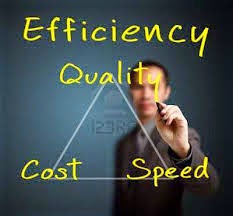
Cutting corners may sound like a good idea in the short-term; however, the long-term outcomes are typically not positive and prove to be quite costly.  As a start-up entrepreneur or small to mid-sized business owner, it is important to understand your business, your competition, the macro/micro environment, and your long-term growth strategy.  The goal of your business should not be to make money, but to create value in the market place, provide superb customer service, and build the best team possible -- making money will come as a result.  It can even be wise to ask yourself, instead of where can I cut costs; what areas can I improve to make the business run more efficiently?  The old school way is to find areas to cut, the new school way is how to maximize efficiency and productivity.  Thanks technology!

As always, I'd love to hear your comments and thoughts on this topic.

If you are in need of any business and/or marketing consultation, feel free to shoot me a brief introduction note at: modernbizstraetgy@gmail.com.

Cheers,

ModernManTellsAll


Enter your email address:


Delivered by FeedBurner


Tuesday, September 2, 2014

Career: Know where you're going


Know where you're going...

To know where you are going is one of the best pieces of advice any one can receive.  I can't tell you how many times I've heard this growing up, from my parents, teachers, mentors etc.  However, I can tell you it is about just as many times as I've ignored the advice, not necessarily on purpose but more from being naive and inexperienced in life.  I was always one of those people that knew what I did not want to do or where I did not want to go, but that only gets you so far.  At some point you will come to a crossroads in life and you'll have to decide where you are going and where you want to be.  And having a general idea can be extremely helpful.

Although knowing where we are going and where we want to be is a great piece of advice, most go through life without an understanding of what they want for themselves, and what their purpose is.  Many of us let life dictate our future and our plans even if it is truly not where we want to be and go.  Napoleon Hill would refer to this as "drifting".  According to Mr. Hill, nearly 98% of the human population are considered drifters and only 2% are considered non-drifters; therefore the chances are, you, me, and most people you know are drifting.  There are countless reasons for why this happens and Mr. Hill goes in to the details in his books, Outwitting the Devil and Think and Grow Rich, and he explains it much better than I, so if you're interested I'd recommend giving them both a read.  I will, however, tell you that the act of drifting and non-drifting, for that matter, are in full control of the individual.

I actually have been drifting for the majority of my life.  Yea, I always knew what I did not want to do and where I did not want to go, but I never actually knew where I was going and what I wanted to do - until now.  So how did I figure it out?  We'll, it really wasn't rocket science, but it did take a lot of hard work, ups-and-downs, successes and failures, and mental toughness.  I'll outline 3 main steps that changed my path, and pointed me in a direction where I am excited to be adventuring towards.

1. Determination


Determination is what it takes to get through much of everything in life, but it is even more important when breaking out of the drifting mode and into the non-drifter demographic, which is not easy.  As everyone knows, life will always throw you "curve-balls" and try to beat you down, but it is how you choose to react to these life challenges that dictate the outcome.  You can't let these challenges have a negative affect on you, after all, you have a goal and an idea of what you want out of life and where you are going, so keep at it.  Take all those challenges and negative experiences and learn from them, but don't let them set you back - stay on your path and keep moving forward.  Believe me, I have gone through many ups-and-downs from moving to LA without knowing a soul to my dad passing away to leaving a job, laid off, etc.  But, in the end all has led me to where I am now, and mentally I've never been in a better place.  Determination is the one thing that has kept me going through all of this, and I believe it is the most important if one wants to break the habit of drifting through life.  Without determination one would try things a couple of times, maybe even just once and then give up - staying stuck in the same place mentally and physically.   I know this for a fact as I've had this mentality in the past.  I had no clue as to where I wanted to go and how I was going to get there, I just went with the flow.  After all, determination is what made Thomas Edison fail over 10,000 times before he came about the phenomena of electricity, which many of us take for granted as if it has always been a part of this world and human life.

2. Never stop learning


It doesn't matter what it is, never stop learning.  You could be the president and CEO of the biggest and best company in the world - think Amazon, Apple, Google, etc.  And the minute you think you know it all and stop learning, you will lose that competitive advantage, your job, the company will lose market share, etc.   In today's world, the information age, knowledge can be acquired quite easily and educating yourself should be at the top of everyone's list.  While you journey to where you want to go, gather as much information as possible along the way, on as many subjects, as you never know what you'll need on your way and when you get there.   Furthermore, as you learn new subjects and expand your knowledge of topics you already knew a bit about, your path and destination will become clearer with each step.  Maybe you had a general idea of what you want to do, the industry you want to work in, where you want to live, but as you continue to learn - the knowledge you gain may help you hone in on an that exact position, industry, company, city, etc.   Soon your vision will become a reality.

3. Write things down (your plan, ideas, tasks, etc.)


I know it sounds cliché' but it's true, write things down.  We all have ideas and plans in our heads, whether it be personally or professionally, your business plan, marketing ideas, etc., it doesn't matter.  If you ask me, if you don't have it written down you have nothing.  Now, I am not saying that having ideas in your head is a lost cause, quite the contrary, those ideas are the seeds that will lead one out of drifting and into the 2% of non-drifters.  The problem is a lot of us have those ideas for a great business plan, new invention, ways to find that dream job, where we are going - you get the idea; however, the majority of us do not act or succeed in transitioning these ideas in our heads into a reality.  As a matter of fact, for the majority of us life ends up dictating our situation and before we know it time flashes bye and it's either "too late" or the passion for that idea has left or the idea never was expanded on.  I know for me personally, writing things down, making lists, setting goals, and dates to complete "X" by this date has enabled me to have a clear vision of my plan to where I want to be/go.  To be honest, I tell clients that I meet with, many of whom are small business owners and entrepreneurs, where the most common thing among them is they all have plans and ideas, however, it is almost always in their heads, to write things down.  Write that growth strategy down.  Write the marketing plan down, etc.  How do you know how you are going to get there without having it written down?  How do you plan on tracking your accomplishments?  What if you forget?  How can I help you if we don't have it written down in a business plan, marketing plan, growth strategy, etc.?  The same can be said for ones life and where they are going...how do you know exactly where you are going and how you are going to get there, if it's not written down?

I really do not know if these steps will help everyone, but what I do know is this is what has enabled me to move forward and finally find a path to where I want to go, not just where I didn't want to go.  Now everything I do moving forward will be one-step closer in the direction of where I am heading instead of to the right or left, or worse, backwards.  And that is a pretty good feeling.

As always, I'd love to hear your comments on this topic, so please leave comments if you desire.

PS - If you are in need of any Business and Marketing consultation for your small to mid-sized business/start-up feel free to shoot me an email at: modernbizstrategy@gmail.com.

Cheers,

ModernManTellsAll


Enter your email address:


Delivered by FeedBurner

Tuesday, August 12, 2014

Business Strategy: Innovate


Innovation.  What do you think of when you hear the word innovation or innovate?  By definition innovation means a new device, idea, or method.  However, I, like many others, would say: Innovation, in business terms, is something that is tied to creating a new product, which is different from anything else on the market.  The iPhone, for example, would be an innovative product.  It changed the way we (humans) communicate with one another and interact with technology.  Everyone now has instant access to any information they desire, hundreds of thousands of applications that can perform any task and/or can "socialize" with a person(s) of their choice whenever and wherever they like.  This would be considered a radical innovation.

Innovation is most commonly tied to tech-based companies such as Apple, Google, Microsoft, Twitter, Samsung, Netflix, Amazon, etc.  Top 40 most innovative companies in 2014.  Companies that are driving how the consumer engages in their day-to-day lives.  Think of all the innovative products these companies have brought to the market in just the last 5 or 10 years.  Everything from iPhone, iPads, Google Glass, Samsung Smart Watch, Smart TV's, Nest, etc., and who knows what the next product will be.  The truth is technology, the way we know it today, is just in its infancy and will only become more advanced and integrated into our lives as time goes bye.

The above are all undoubtedly innovative companies and products, but does innovation only apply to these major companies or just in technology?  I'd argue most definitely not.  There are many other ways to innovate across all business units, and it does not apply only to a product or service.  Innovation can occur or be applied to anything from customer service, marketing techniques, business models, company culture, or overall strategy.


Customer Service is something all companies offering a service or a product engage in, no matter what the industry.  A company dealing in B2B or B2C must offer some form of customer service otherwise they would be unable to retain customers or garner new ones.  Take for example Time Warner's new customer service model - the one-hour service windows.  We all know the hassle of the four-hour service window and how inconvenient they can be.  In the past if you had a service inquiry you would get a time between 9am and 12pm or 1pm and 4 pm, and many times the technician would show up late or worse not at all.  This has caused a dramatic decline in their customer retention.  Well, to rectify this Time Warner has launched the one-hour campaign.  While this is only an incremental innovation it still is considered innovative.  Another example would be the banking industry.  I recently went out to inquire and compare small business bank accounts and found that the big three (Chase, Bank of America, and Wells Fargo) offer vastly different options, most of which are differentiated by monetary and customer service (incremental innovations).


Marketing techniques can also be innovative, and most of the successful brands have utilized this to capture market share and disrupt industries.  Think about all the advertisements we see on a day-to-basis.  Some studies have that number at anywhere from 250 to 3000 per day, depending on age group and where one lives.  This is astounding.  It makes one think how can a human brain digest and retain this mass inundation of advertisements?  Well, I'd argue it can't.   So how can a brand create a campaign that actually sticks in our minds and eventually persuades us to make a purchase - through innovative marketing techniques!  A brand that comes to mind (that is not considered a major global brand) is the Dollar Shave Club with their innovative and memorable ad campaign and video.  Although they did not recreate the wheel so to speak, they did use an innovative approach with a serious yet tounge-and-cheek style video, which intern caused the video to go viral and gain brand recognition.

Business Models, or how the firm plans on making money, is yet another way a company can innovate to gain a competitive advantage.  This to me is the most effective way to compete in a highly competitive globalized market place.  Not everyone has an idea nor the funds to create and implement a radically innovative product, however, if one can develop and implement an innovative business model they would have a fighting chance - even if they are offering the exact same product or service as the competition.  An example of this, again outside of the obvious major corporations, would be in my previous industry.  I worked in the music industry for over 6 years, and as we all know, the music industry is one of the most competitive and most effected by the advent of the internet, therefore competition is fierce with saturation on all fronts.  So how does one enter the market place and cause other, more established competitors, to notice?  By having an innovative business model.  There are a few that come to mind: one being Jingle Punks and the other Music Dealers.  Both of these companies entered the industry in 2008 and are now two of the most recognized in the industry.  What was their innovative business model you ask?  Well, they implemented a 50/50 business model where the artist splits the gross revenues 50/50 with the company.  Granted this is not a sustainable business model for any business in any industry; however, it enabled them to build their catalogs with above average content quickly - thus enabling their competitive advantage when marketing to and courting clients.


Company Culture is something that has been misunderstood and underestimated in the past, however, has made a rapid resurgence - becoming one of the most important factors for a business to succeed, garner market share, and attract top-level talent.  By definition company culture is the values and behaviors that contribute to the unique social and psychological environment of an organization. Many companies use minor incremental (sometimes radical) innovations in their company culture as a competitive advantage and to court and retain talent. A company that comes to mind is Zappos. They are known for their innovative cultural design which empowers all employees, encourages change and personal growth, creates a fun, light and positive environment, has an open horizontal structure, and has a list of core values that all employees adhere to. Their CEO Tony Hsieh has even written a book based on the importance of company culture called Delivering Happiness. Checkout their core values here.


Overall Strategy is something that all company's must consider, preferably prior to launching into the market, and should be monitored constantly and adapted as necessary.  By definition strategy is the quest to gain and sustain a competitive advantage.  Sounds simple enough, right?  Well, you'd be surprised how many companies (small and large) are lacking an overall strategy and are just "winging it" day by day.  A strategy is not just "let's make money".  It is the managers theories about how to gain and sustain a competitive advantage; How a company differentiates itself; What to and not to do, etc.  Furthermore, strategy is a combination of all of the aforementioned topics, and an innovative strategy is what separates a company from the competition.  A good and obvious real world example of this would be Google.  Google is by far the most dominate search engine with over 68% of the overall market share.  This is despite competition from Yahoo!, Microsoft Bing, and the Chinese search engine Baidu.  How can Google maintain such a dominant position in an industry where billions of people use the service on a day-to-day basis?  Innovative overall strategy!

As mentioned above, we are now operating in a highly competitive global economy and innovation is considered the most critical aspect of business moving forward.  It is no longer just a buzz-word, it is essential across all business units and industries.  If you're standing still, you're falling behind exponentially.


As always, I'd love to hear your comments on this topic, so please leave comments if you desire.

PS - If you are in need of any Business and Marketing consultation for your small to mid-sized business/start-up feel free to shoot me an email at: modernbizstrategy@gmail.com.

Enter your email address:

Delivered by FeedBurner

Friday, August 8, 2014

Lifestyle: So much to learn, so little time


I can remember growing up and not even thinking twice about how important it is to learn and be educated. My primary focus was on playing sports and enjoying time with friends - that was the most important thing.  Throughout grade school and high school I basically coasted along, going through the motions and getting mostly B's with a few C's and A's, mostly without much effort outside of the classroom.  This mind-set didn't change much, maybe even declined as I graduated high school and went to junior college at Harper and ECC.  I barley went to class and had no desire to learn anything new.  You could say I thought I knew it all as most teenagers assume - at least the males.  I pretty much spent most of the time partying with friends and enjoying life, without even a clue as to what I wanted to do.

Moving on to my decision to go to a four year college in 2000.  I felt I had to do something as I, and the majority of the people I was hanging with, really had no direction - and drifting through life.  So I had a self-realization, so to speak, and went through (mentally) what it is I really like to do, outside of playing sports.   I came up with two paths - both of which would enable me to move out of the mid-west and to the west.  It came down to culinary school and film/audio school.  Well, I chose to go to film/audio school at Columbia College Chicago.  This is where things started to change for me mentally, as the subject matter and teachers at Columbia were intriguing, engaging, and informative.  Although I had been more engaged than ever, I was still only giving about 75% effort towards learning, homework, and classroom participation.  This could be attributed to just growing up and realizing how the world actually works or just slow to adhere to authority.  Needless to say I graduated with a 3.0 average (not bad) and made the move to Los Angeles shortly after.

Not to lose sight of what this post is about, as it's not about me per-se but it gives a real life example to compare to; it's the fact that there is so much to learn and so little time.  The amount of information out there that we now have instant access to is mind-boggling to say the least.  This phenomena really hadn't occurred to me until recently.  Learning is actually addictive, and the personal growth one can achieve through this access to information can be exponential.  I say exponential meaning once your mind is trained to obtain and process information and you break through the misconception that you know everything and/or are content with who you are and what you know, the craving to learn overcomes and drives you.


Take for example my recent studies at Northeastern University where I obtained my MBA.  The amount of information and knowledge I gained just by dedicating myself to learning the material has been a life changer for me.  I like to describe it as a mental evolutionary leap.  It was the first time I actually gave 100% effort towards school or any learning for that matter.  Now, I can essentially talk business and economics with anyone, from Fortune 500 execs to Professors to regular people.  To be honest, it has gotten to the point where I'd rather sit down and read a book or watch an educational documentary, or a TEDTalk than some mindless television show or movie.  I've even contemplated going for a PHD, if it did not cost an absurd amount of money of course.


The point is, once you realize the importance of education and the value of being informed, the more you want to know and obtain, and the less time you want to waste on meaningless content - it's an addiction just like cigarettes or alcohol.  Further, the more educated one is the more freedom one has and the less chance one has of being controlled by fear.  Couple all that with the fact that life is short, even if you live to 90, that is only a blink of an eye in the broad scope of life on earth.

We are living in the information age, and now have access to everything and anything at the push of a button or by typing a few keywords in a Google search.  Many of the top universities are now offering their courses online to anyone interested, granted you will not get credit or a diploma; however you will gain the knowledge which can be applied to your daily life and career.

Learn as much as you can while you can - you will not regret it - and no one can ever take what you've learned away from you. You can lose material things, family and friends, but what knowledge you have that is yours (outside of a mental disease or injury).  In my opinion the most important thing to living is consuming information and growing as a man and as a human.  And then passing that education/knowledge down to others willing to listen and learn.

As always, I'd love to hear your comments on this topic, so please leave comments if you desire.

PS - If you are in need of any Business and Marketing consultation for your small to mid-sized business/start-up feel free to shoot me an email at: modernbizstrategy@gmail.com.

Cheers,

ModernManTellsAll

Enter your email address:

Delivered by FeedBurner

Monday, July 28, 2014

Business Strategy: True Company Identity


I see this far too often when consulting and communicating with friends and clients who own/run startups and small to mid-sized businesses - NO true company identity.  The lack of company identity is at the top of the list when it comes to failing small businesses and/or start-ups, and should be addressed from the initial launch if possible, as the longer this goes on, the harder it is to fix.  There is far too much competition in today's global economy to not have a company identity. What I mean by true company identity is: What type of product/service do you offer?  How much does it cost?  Who are your target demographics?  Is your product/service of poor, good, or great quality (hopefully good to great)?  What type of culture does your company have?  Does the branding of the company portray what you do?  etc.  The point is, potential and current clients must be able to identify with your product/service quickly, so when they are searching for it they can immediately identify what it is you do and what your company is about.


Now, I understand the fact that running a small business or start-up is extremely difficult (I've been there) and it truly is survival of the fittest.  In order to make bills and bring in cash many owners become frantic and will except any and all work, service a diverse set of clients, etc., as long as they are comfortable doing the job, selling the product/service, etc. However, this is only a short-term strategy and usually ends up costing the firm in the long-run.  For instance, let's say you have a small business with 5 or less employees, including you.  This is not a lot of people and one would assume your access to resources such as capital are minimal to nonexistent; therefore, everything you do needs to be calculated in such a way that nothing is going to waste (time, money, people, etc.).  Granted this is a lot easier said than done, when the reality and fear kicks in and you need to make X amount to make rent this month, things begin to scatter and unravel.  I'm sure many of you have been there, as I've seen it one too many times.  This is the reaction of a small business owner who has failed to create, implement, and communicate a true company identity prior to all the panic and fear setting in, I call this " survival mode", doing anything at all costs.

The problem with lacking an overall company identity, as stated above, is the issue of panic and fear will be reoccurring.  Yes, you may have a good month or two and think to yourself (or thank higher power) your problems have been solved.  Well, chances are this will happen again and again, and you will have a bad month or two in a row, then what?  The reality is, yes, you took in any and all jobs that you and your employees skill-sets can handle, however, your company is still lost and new and potential clients will not find you if your brand and company is all over the place.  So make sure  when it comes to true company identity you have one.


A new start-up or small business does not have the time nor the resources to continue down this path, so make sure your next venture, or this one, has been branded as such that it can be easily identifiable  to everyone - exactly what you do, your product/service, etc.  And once its identity has been determined commit any and all resources towards securing a favorable market share in that space.  Once a desirable market share has been obtained, then, and only then should you attempt to extend your product/service line, target markets, etc.   This is not to say, a company should not be thinking ahead and working towards a viable and sustainable vision for the company at all times; or taking on jobs that are not in line with the identity; if you have the time and resources by all means take on the work as long as it's not obstructive to your day-to-day operations.  And if you have dedicated yourself and your company towards this identification and things have not gone as planned, then adjustments need to be made accordingly.  However, I firmly believe that if a company has done its research and its leaders have properly created a true company identity, all resources are dedicated and focused on obtaining market share in that space, the company has positioned itself for success and a chance for survival, at least throughout the growth phase.

As always, I'd love to hear your comments on this topic, True Company Identity, so please leave comments if you desire.

PS - If you are in need of any Business and Marketing consultation for your small to mid-sized business/start-up feel free to shoot me an email at: modernbizstrategy@gmail.com.

Ciao,

ModernManTellsAll

Enter your email address:

Delivered by FeedBurner

Monday, July 21, 2014

Marketing Strategy: To social media or not


To use social media or not?  This is a question virtually all firms (small & large, public & private) in all industries should be asking themselves, and if they are not, they better start.

Flashback 10 years (web 1.0) ago and this question would not even had been an after thought, as many of the top social media applications did not even exist, or were barely in their infancy.  That said, some people/firms did see the advantages and effectiveness of what social media channels, namely Facebook, YouTube, and more recently Twitter, have to offer, enabling the competitive advantage of a having a head start.  The numbers alone on Facebook, Twitter, and Youtube were/are hard to ignore, even 5 or so years ago.


Now, in 2014, or web 2.0 as they say, the numbers are impossible to ignore, where YouTube now gets over 1 billion unique visits a month and 100 hours of video uploaded per minute! Facebook has well over 168 million unique visitors per month.  Twitter has over 48 million unique visitors per month.  LinkedIn (my favorite) is now at over 38 million unique visitors per month.  Pinterest now has over 38 million unique visitors per month as well.  Tumblr is now at over 24 million unique visitors per month.  Instagram has well over 200 million unique visitors per month.  Google+ now has over 105 million unique visitors per month.  There are countless other social media platforms out there, with new ones popping up everyday, however, many do not last, nor are worth spending valuable time and money on.  That said, the above are all well established social media sites, I did leave out Vine, which can be considered as a viable option as well, but not one for the majority of people/companies reading this post.


OK, so we know there are billions of people across the globe scouring the aforementioned social media sites, so which one(s) do you use?  Yes, it can be overwhelming when sifting through the various options social media has to offer, and they all have their own unique functionalities, audiences, communication techniques, etc.  For instance, not everyone that has a Facebook account will have a Twitter account; or someone that's on YouTube and Instagram may not use Pinterest, etc.  Therefore, a company must decide which social media platforms are the best options for their company and industry.

Choosing the right social media platform(s):

First of all, a business owner/marketing manager must ask the important/critical questions: Which social media platform(s) will garner the highest ROI?  What social media applications are my target audience(s) using at this moment?  What is the best way for the firm to go about courting new potential consumers?  What type of product(s)/service(s) does your company sell/offer?  What are the most effective communication techniques to apply on each individual platform? How much time/resources do we have to allocate towards social media? Etc.

Once the target social media platform(s) has been identified, then, and only then, should a strategy be developed.  But first, the business owner/marketing manager must become accustomed to the functionalities and nuances of the platform(s), and if they are not they should (must) find and hire someone that is well versed in social/digital marketing.  Some companies can get away with hiring social media interns as this is was common place a few years back; however, I would not recommend this as many times these interns will lack the awareness and knowledge of your industry and by the time they learn and understand it they will be long-gone; or they only make it a week or two and then you have to find another.  This process alone can prove to be quite costly, not to mention wasting your valuable time.  Nowadays, many colleges and universities are providing majors in social media/digital marketing, or at the very least, are incorporating social media/digital marketing classes into their Marketing programs.  I know when I was pursuing my MBA (as a Marketing major) at Northeastern University, we were required to take a digital marketing class, which proved to be extremely valuable.  As I stated above, all the social media platforms have their own ways of connecting and communicating, and not understanding this will result in a huge waist of time and more than likely - capital.


Moving forward, now you (or someone that does) have a firm understanding of which social media platforms work best for your company and the industry you are competing in.  Furthermore, you have analyzed and done some research on how they function and the nuances of how to communicate.  It is a great idea to checkout your direct competitors to see what they are doing (as far as content) and how they are gaining followers (potential customers), and which social media platforms they are using.  Usually this is a good indication of which ones work best, particularly if you pay attention to industry leaders that have a large number of followers and likes/shares.  Now it is time to develop an Integrated Marketing Campaign/Strategy, which is an entire different topic, and should be done by a trained professional or under the consultation thereof.

To Social Media or Not:

So the question is, to social media or not? Considering the alternative, I'd say it is not only wise to begin (if you have not yet) implementing a social media campaign (even if it's just an individual platform), but also is necessary if you plan on growing your business, increasing brand awareness and market penetration now and well into the future.  Not to mention the fact that social media is a great and affordable way to be creative and brand your company to your liking.  That said, if you are clueless as to how to utilize social media, or do not believe it is effective, I would recommend speaking with a marketing professional(s), researching online blogs, articles, competitors, etc., prior to allocating time during your work day to figure it out or "play around" as it can be extremely time consuming - hours could go bye before you even realize how to post a proper "Tweet".  In closing, I believe social media, when utilized properly, with an effective Marketing Strategy, is the most efficient and effective marketing tool to be implemented to date.  And as time goes bye this "web 2.0" is only going to grow exponentially, so to answer the question - YES, you should start using social media and get connected to your customers ASAP.

I'd love to hear your thoughts on this, so please do not hesitate to leave comments - I'll read them all!

PS - If you would like consultation on the implementation of social media and Marketing Strategies, feel free to email me at: modernbizstrategy@gmail.com.

Cheers,

ModernManTellsAll

Enter your email address:

Delivered by FeedBurner

Thursday, July 17, 2014

Business Strategy: Know your competition


There are many articles online (LinkedIn, independent blogs, etc.) and in informative magazines and publications (Entrepreneur, WSJ, Harvard Business Review, Fast Company, Text Books, etc.), which will tell you how to run a business, manage a start-up, what to do, what not to do, etc.; however, I'm going to tell you, it is just as important to know and understand your competitors.  It amazes me that in this day and age, where the global economy is fully entrenched in all industries, information is readily available and accessible to all - many companies still choose to operate as if they were the only firm in that industry.  You can have the best business plan in the world, but, if you are unaware of the competitive landscape (who your competitors are and what they are doing), that amazing business plan may be all for not.  You may even risk the possibility of a savvy (established, innovative) competitor, who is aware of you and your business model, to copy and implement it before your business even has a chance to get off the ground.  

I would like to introduce and explain some realizations that have come to my attention along my professional career and as I was perusing my MBA from Northeastern University.  

Global Economy:


The first of which is obvious but should not be ignored or discredited, the fact that we are now in a global economy, every industry is experiencing increased competition, and as the years go bye it is increasing exponentially due to third world countries, namely the BRICS nations; all of which are experiencing emerging economies as their access to resources and technology grows.  Many of these countries operate under their own proprietary laws and, maybe more importantly, have access to cheap labor – enabling companies to make products which are similar for much cheaper than in established 1st world countries. 

Access to Technology & Lower Barriers of Entry:

Access to technology and lower barriers of entry go hand-in-hand as the former enables the latter.  The access to technology has essentially leveled the playing field when it comes to competition.  A small independent start-up now has the potential and access to the same technology as a major firm, which was not the case 10 or 20 years ago.  For one, technology (computers, internet, marketing channels, etc.) came at a much higher cost in the past.  Now the majority of people/businesses are able to purchase a computer and the internet, build a website, and market their product all with minimal capital investment.  A first-hand example of this would be the music industry.  The music industry was really the first to feel the effects of this in the early 2000s with Napster and other file sharing platforms, which essentially destroyed the major record labels.  I’m not saying whether this is or is not a good or bad thing, as the record labels failed to adapt and innovate quickly to the changing landscape; therefore it was of their own doing.  Fast-forward to today, where now every artist, composer, band and record label (large and small) has access to the same technology and clients for that matter, making for a highly competitive market place.  Furthermore, lower barriers of entry (affordable hardware and software) have been a major factor as well in regards to increased competition. Although the music industry was the first to be hit by this phenomena, it is a reality for all industries, and business owners must take notice.

Access to Information:


Access to information coincides with the above as it is technology based, however, it deserves its own explanation due to the fact that it is still fairly new and very important when analyzing and understanding your industry's competitive landscape.  In the past companies would have to rely on “insider” data or having to wait for a particular competitor’s TV/Print Ad to air, well that is no longer the case.  Now everyone has instant access to all the vital information they need – including websites, financial data, marketing techniques/strategies, operational methods, personnel, territories, etc.  Everything can now be accessed via the internet by searching company names, industry related keywords, social media, etc., so there’s no excuse not to “do your homework” (you may actually come up with an innovative idea along the way) and research as much as you can about what the competition is doing – smart companies are doing it everyday so don’t wait!  

Conclusion:

All of the above factors have led to increased competition and, in many cases, market saturation.  This trend will only continue as more and more countries and small innovative start-ups enter the global economy.  This does not mean that starting and/or running a business is not a good idea – quite the contrary, as it is a great idea (for certain people)!  The costs to start and run a global business is at all time lows, at least for those that know and understand how to leverage the above factors to their benefit.  Those that do not, and are stuck operating in an outdated business model will not survive in today’s world where you are either in the lead or falling behind.  And when you fall behind it can drain capital quick as you try and catch up - and when you do catch up, the competition may have already moved on to some other innovative business model or product/service.  Everything moves fast, including your competitors, so don't assume you are the only one out there, or implementing these techniques.  Remember, always try and stay in the lead or at least a close second.

PS - If you are in need of any Business and Marketing consultation for your small to mid-sized business/start-up feel free to shoot me an email at: modernbizstrategy@gmail.com.

Enjoy the ride!

ModernManTellsAll


Subscribe in a reader