Showing posts with label Modern Business. Show all posts

Tuesday, November 18, 2014

Business: Old School vs. New School


As we all know everything has changed since the financial collapse of 2008, but how exactly have businesses changed?  I'm going to break it down to its simplest form in this "old school vs. new school" post.   Alright, here we go! (seasonally appropriate colors are a coincidence)

Old school: Profits above everything else.  New school: Triple-bottom line (Economic, Environment, Social).

Old school: Keep business units separate. New school: Integrate cross-functional teams.

Old school: Large capital investments (infrastructure, people, resources, assets, etc.). New school: Bootstrap.

Old school: Pleasing shareholders is the be-all-end-all. New school: Equally pleasing shareholders and stakeholders.

Old school: Very few industry players. New school: Ultra-competitive across industry.

Old school: Focus on short-term goals and gains. New school: Focus on long-term sustainability.

Old school: Put all eggs in one basket. New school: Have multiple baskets.

Old school: Productivity measured by how long/how many hours worked. New school: Productivity measured by how much you get done.

Old school: When facing declining profits -- cut, cut, cut, no matter what (mostly employees). New school: Do what you can to keep the team in place.

Old school: Vertical hierarchical structure. New school: Horizontal organizational structure.

Old school: Money flows up to executives at the expense of employees. New school: Money still flows up, but in a more balanced way.

Old school: High barriers of entry. New school: Low barriers of entry.

Old school: Control of consumer behavior. New school: Consumers have the power.

Old school: Cold calls. New School: Social Media.

Old school: Huge slow moving entities. New school: Lean and agile.

Old school: Mimic successful traditional business models. New school: Disrupt.

Old school: Move slowly when making business decisions. New school: Adjust and implement on the fly.

Old school: Managers and Execs have all the power. New school: employee empowerment.

Old school: Traditional Advertisements (TV, Print, Billboards, etc.). New school: Social Media, Blogs, Online videos, Mobile, Podcasts, etc.

Old school: Power/Control economy (control every aspect of business). New school: Sharing economy.

Old school: Heavy investment in human capital. New school: Automate.

Old school: Cubicles. New school: Open.

Old school: Work harder. New school: Work smarter.

There are definitely more differences between businesses of today vs those of 10, 20, 40 years ago; however, these are the main ones I could think of off the top.  Obviously, each should be defined further but that can be done by researching the internet, going to a top business school, or hiring a consultant.  I do understand that few things in business still remain: bring in more than you spend, bottom line, good/great leaders, innovation, customer service -- to name a few.

If you have any others that I have missed, feel free to list in the comments section.  I'm curious to hear what others think.

Until next time.

ModernManTellsAll


Enter your email address:


Delivered by FeedBurner

Monday, October 20, 2014

Business/Entrepreneur: Do NOT cut corners


One of the most valuable lessons I've learned in my life is: Do not cut corners in anything you do that is of value to you, whether it is in business, relationships, or personal.  I can remember going through college (undergrad) and just coasting along -- essentially "cutting corners" -- not giving it 100% and thinking once I graduate things will just fall into place.  Yeah, well that is not how life works nor should it.  The same goes for business.  Let's say you want to start your own business or work for a company that is: A) just starting out or B) has been around for a while but is struggling to maintain a profit.  What do they all have in common (typically),  limited access to money, resources, and human capital, right?  So what is the typical answer to this issue?  Free work!  Free software! Free whatever!


In the modern, digital world we have these expectations that things should be free -- everything from information to education, tech-platforms, and applications.  In some instances this is true and many free pieces of information, technology and applications can be beneficial and useful when operating a business, and should be leveraged.  Some products/services that come to mind are: Wix.com, Google Docs/Drive, Skype, Zenefits, Social Media Channels (Hootsuite, Facebook, LinkedIn, Twitter, Pinterest, etc.),  Blogs, Dropbox -- there are many more either free or affordable platforms and software one can use to enhance their business operation and market penetration.  Someone can even take FREE classes online at MIT, Stanford, and Yale if they were feeling ambitious -- doesn't mean you'll get a degree from said school or even finish the class.  These are all good, positive and productive ways to cut costs and improve efficiency at the same time; however, there are areas where "cutting corners" in business can be a detriment, completely destroy what you sought out to build, and make all the hard work and time you've invested up to that point a waste.  Many of these examples of cutting corners have been commonplace over the last 30 or 40 years, but are no longer viable for various reasons.


The first of which is free employment or un-paid internships.  Don't get me wrong, I am all for the internship position and believe there can be value created for both the intern and the company as long as it is the right fit.  The right fit would be an intern that is passionate about the industry, wants to learn, grow, and contribute; work hard with the intention to further their career, build a valuable skill-set that cannot be learned in a classroom; and understands the outcome prior to starting (e.g. college credits, 3 month trial period, possible employment when internship is fulfilled, pay or no pay, etc.).  The company must be honest from the jump of their intentions, the duties expected to be performed, challenge critical thinking skills of the intern -- not just have them get coffee or take out the trash; communicate clearly its intentions, the duration, and the possible outcomes.  Nothing is worse than a company that offers an internship to a high-performing individual that is expecting to work for 3 months and then either be brought on full/part time (paid) or after the 3 months move on with a great learning experience and professional references.  I have a theory I like to promote to businesses that act unethically and manipulate free work to benefit themselves, and that is: If you cannot afford to pay someone what they are worth, or close to it, to perform their duties at a high-level (after discussed duration of internship is up) then you'll have to find someone else whom may or may not be as efficient and productive as the last, thus potentially wasting more time and money.  Or you'll have to perform the duties yourself, chances are you won't have the time nor the technological knowledge.  Or you can try to automate some of the tasks (costs more upfront).  If none of the above are feasible, it may be time to reevaluate your business model and ask yourself, why your company is failing to move forward and increase revenues and market share.  As the old saying goes, "It takes money to make money."


The second example of cutting corners in business that will most certainly end up costing you more in the long-run would be to not invest in your product/service offered.  In today's global market place, consumers are extremely informed, transparency is on the up-swing, competition is fierce, and everyone has a voice (social media).  What does this mean for businesses? Well, it means an inadequate products/services will not last nor will it be profitable, particularly when starting/launching a new product/service.  We all know about the endless recalls from major car manufactures from Toyota to GM, which can be viewed as cutting corners in the manufacturing costs; however, while it is still damaging to their brands, they have the longevity, capital, and loyalty to overcome something as catastrophic as recalling millions of cars.  This is not something a new start-up or SMB can sustain, as a matter of fact, the product/service should be your primary focus when building your business model, as it is the major factor that will separate you from your competitors and enable sustainable growth.   We've all seen, owned, or worked at a company where their mentality is to invest as little as possible into their product in order to maximize the salaries at the top.  Well, that may work in the short-term, however, in the long-term they are setting their businesses up to fail, and they most likely do within a few years, without an attempt to correct the quality of their product/service.  Bottom line, invest in quality, you will not be disappointed.


Another tried and true example of cutting corners in business that will most certainly end in demise at some point is to under pay your employees and/or not offer perks to supplement lack of salary.  As I have written in the past, the most valuable asset to a company, particularly a start-up or SMB is its team.   In a highly competitive work environment, competition for top-level talent is fierce and the ability of a company to attract and retain such talent is mandatory in order to remain competitive and innovative across all industries.  The age of technology has changed the way business gets done: increasing productivity and efficiency.  Let's face it; a highly efficient and competent individual can essentially perform the duties of 5 or more people from 10 or 20 years ago.  So how does a business owner retain and attract a high-level individual -- through either a high salary, perks, flexibility, equity, or a combination of.   When business owners fail to address/offer any of the aforementioned, they will experience a high turnover rate, inefficiencies in the the day-to-day operations, lack of motivated employees, the inability to attract and retain top performers, and the list goes on and on; all of which end up costing the company heavily in the long-term.  A truly sustainable and viable business should have no problem attracting and retaining the best talent possible, which is relevant to each company's specific needs.  Just to give a quick example: Let's say you have a new tech start-up and you are looking for a top programmer for your new app, the question you should be asking yourself is what can I offer to lure him/her away from Apple or Google?  I know I can't offer a salary anywhere close to Google or Apple, but maybe I can offer equity and flexibility?  Money is not the be all end all when it comes to job satisfaction, at least not to the extreme as in the '80s -- thinking "Wall Street".

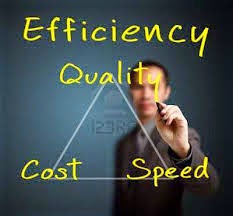
Cutting corners may sound like a good idea in the short-term; however, the long-term outcomes are typically not positive and prove to be quite costly.  As a start-up entrepreneur or small to mid-sized business owner, it is important to understand your business, your competition, the macro/micro environment, and your long-term growth strategy.  The goal of your business should not be to make money, but to create value in the market place, provide superb customer service, and build the best team possible -- making money will come as a result.  It can even be wise to ask yourself, instead of where can I cut costs; what areas can I improve to make the business run more efficiently?  The old school way is to find areas to cut, the new school way is how to maximize efficiency and productivity.  Thanks technology!

As always, I'd love to hear your comments and thoughts on this topic.

If you are in need of any business and/or marketing consultation, feel free to shoot me a brief introduction note at: modernbizstraetgy@gmail.com.

Cheers,

ModernManTellsAll


Enter your email address:


Delivered by FeedBurner


Saturday, September 20, 2014

Lifestyle: Manage your time...

This is an open letter to all the horrible time managers out there...please take the initiative and manage your time, because it affects all of us!
All right, this is going to brief but hopefully informative and reflective. How many of you out there have been victims of a horrible time manager, or are one? (show of hands) I see about half of the crowd has raised their hands (hahaha).
I get it, we all have a lot going on in today's hyper fast, ultra digital world. We have our physical life and well-being to attend to and our virtual life, which is slowly creeping up on the physical, but not there yet. So we may be late to a meeting, date, friends birthday, wedding, etc., but why?
If the reason is: There was a horrible accident. I got lost. I was on the phone with my mom (who lives in another state/country). I ran out of gas, not a good one but acceptable (unless it happens more than once), etc. You get the picture. There are some legitimate excuses, however, for the most part being late is a product of poor time management.
I know it may sound "parental" in a way, at least my mom says this all the time; "You should leave early enough to prepare for traffic and/or accidents," especially when leaving for an interview, important work meeting, pretty much anything business related as social situations are allowed some leeway by default.
What I have come to realize as my life has gotten busier and busier, and as I've grown into a responsible man (thanks mom), is the fact that my time is valuable as is everyone's. If the meeting is at noon be there at noon (at least) or even better get there 10-15 minutes early. If you say let's meet at 3pm and you can't get there at 3pm, let everyone else know, preferably at least 30 minutes or an hour before. After all, everyone is busy, whether they are busy being productive that is another story.
"Better three hours too soon, than one minute too late." ~ William Shakespeare
Technology is supposed to make our lives that much easier, not harder. There are tons of apps out there that can help you manage your time and tasks, set reminders, set alarms, workout timers, monitor traffic conditions, estimated time of travel, etc. All there to make you more efficient and productive. Let's not forget the countless ways to communicate: text, social media, email, a PHONE call, so let's try and use it people.
Side note: The new iPhone comes out today and iOS 8, both of which have applications to help with time management.
Salutations,
Nicholas

Thursday, July 17, 2014

Business Strategy: Know your competition


There are many articles online (LinkedIn, independent blogs, etc.) and in informative magazines and publications (Entrepreneur, WSJ, Harvard Business Review, Fast Company, Text Books, etc.), which will tell you how to run a business, manage a start-up, what to do, what not to do, etc.; however, I'm going to tell you, it is just as important to know and understand your competitors.  It amazes me that in this day and age, where the global economy is fully entrenched in all industries, information is readily available and accessible to all - many companies still choose to operate as if they were the only firm in that industry.  You can have the best business plan in the world, but, if you are unaware of the competitive landscape (who your competitors are and what they are doing), that amazing business plan may be all for not.  You may even risk the possibility of a savvy (established, innovative) competitor, who is aware of you and your business model, to copy and implement it before your business even has a chance to get off the ground.  

I would like to introduce and explain some realizations that have come to my attention along my professional career and as I was perusing my MBA from Northeastern University.  

Global Economy:


The first of which is obvious but should not be ignored or discredited, the fact that we are now in a global economy, every industry is experiencing increased competition, and as the years go bye it is increasing exponentially due to third world countries, namely the BRICS nations; all of which are experiencing emerging economies as their access to resources and technology grows.  Many of these countries operate under their own proprietary laws and, maybe more importantly, have access to cheap labor – enabling companies to make products which are similar for much cheaper than in established 1st world countries. 

Access to Technology & Lower Barriers of Entry:

Access to technology and lower barriers of entry go hand-in-hand as the former enables the latter.  The access to technology has essentially leveled the playing field when it comes to competition.  A small independent start-up now has the potential and access to the same technology as a major firm, which was not the case 10 or 20 years ago.  For one, technology (computers, internet, marketing channels, etc.) came at a much higher cost in the past.  Now the majority of people/businesses are able to purchase a computer and the internet, build a website, and market their product all with minimal capital investment.  A first-hand example of this would be the music industry.  The music industry was really the first to feel the effects of this in the early 2000s with Napster and other file sharing platforms, which essentially destroyed the major record labels.  I’m not saying whether this is or is not a good or bad thing, as the record labels failed to adapt and innovate quickly to the changing landscape; therefore it was of their own doing.  Fast-forward to today, where now every artist, composer, band and record label (large and small) has access to the same technology and clients for that matter, making for a highly competitive market place.  Furthermore, lower barriers of entry (affordable hardware and software) have been a major factor as well in regards to increased competition. Although the music industry was the first to be hit by this phenomena, it is a reality for all industries, and business owners must take notice.

Access to Information:


Access to information coincides with the above as it is technology based, however, it deserves its own explanation due to the fact that it is still fairly new and very important when analyzing and understanding your industry's competitive landscape.  In the past companies would have to rely on “insider” data or having to wait for a particular competitor’s TV/Print Ad to air, well that is no longer the case.  Now everyone has instant access to all the vital information they need – including websites, financial data, marketing techniques/strategies, operational methods, personnel, territories, etc.  Everything can now be accessed via the internet by searching company names, industry related keywords, social media, etc., so there’s no excuse not to “do your homework” (you may actually come up with an innovative idea along the way) and research as much as you can about what the competition is doing – smart companies are doing it everyday so don’t wait!  

Conclusion:

All of the above factors have led to increased competition and, in many cases, market saturation.  This trend will only continue as more and more countries and small innovative start-ups enter the global economy.  This does not mean that starting and/or running a business is not a good idea – quite the contrary, as it is a great idea (for certain people)!  The costs to start and run a global business is at all time lows, at least for those that know and understand how to leverage the above factors to their benefit.  Those that do not, and are stuck operating in an outdated business model will not survive in today’s world where you are either in the lead or falling behind.  And when you fall behind it can drain capital quick as you try and catch up - and when you do catch up, the competition may have already moved on to some other innovative business model or product/service.  Everything moves fast, including your competitors, so don't assume you are the only one out there, or implementing these techniques.  Remember, always try and stay in the lead or at least a close second.

PS - If you are in need of any Business and Marketing consultation for your small to mid-sized business/start-up feel free to shoot me an email at: modernbizstrategy@gmail.com.

Enjoy the ride!

ModernManTellsAll


Subscribe in a reader

Monday, July 14, 2014

Entrepreneur: Choose your Business Partners wisely


One of the most important and critical decisions you will have to make when starting a business is who to partner up with.

There are many reasons why or why not to choose someone, some more obvious than others.  This blog is intended to breakdown what I believe are the five most important factors to thoroughly analyze and consider prior to moving forward with a decision. 


So you have a great idea for a new business, whether it’s an incremental innovation on an existing product or business model; or one that is brand new and/or is radically disruptive, chances are you wont be able to do it on your own, and I would not recommending doing so.  Therefore the question is: who’s the best man/woman to approach? 

Most people's first instinct is to work with someone that they know very well (friend or family member).  This may seem logical (initially) assuming you get along with this particular person(s), have known them your entire life, share the same interests, etc.  However, there is much, much more to selecting a business partner other than how well you know or "think" you know them, as things/people change when other variables enter the "frey" (e.g. money, egos, growth path, vision, exit strategy, personal goals, equity share, personal life, etc.).  As a matter of fact, choosing a business partner is kind of like dating (per say).

Personality:


Running a start-up is a roller coaster, you will experience many highs and lows, ups and downs, so you'll need someone that can roll with it and not let it bother them too much.  In fact, it is good to have someone that can make light of the situation (as long as it's not too serious).  Furthermore, their personality should complement yours, just like in a relationship you need balance.  If you're personality is super outgoing and forward, you'd want someone that is more laid-back and reserved. Everyone that has been involved in a start-up will tell you there are always issues and when there's not, there's one right around the corner; so you want to be able to rationally discuss the strategy on how to fix the issue with someone, and keeping the atmosphere light is extremely helpful.

Reliable:


This one is very important, particularly to me as it's a pet-peeve of mine.  It really irritates me when I am supposed to meet with a client or business partner and they are always late - time is precious to all of us as life moves very fast, especially in today's world.  The last thing you would want is to start a business and partner with someone who can not manage their own time.  To me this is a HUGE red flag.  As I stated above, when running start-ups issues are always showing face and when they're not, one is right around the corner.  Imagine how frustrating this would be if you had to handle the majority of them on your own, or had to wait to hear from your partner who is nowhere to be found.  This can sour a relationship/partnership quickly, not to mention the waste of time and capital - I've seen it first-hand.

Knowledge/Intelligence:


What I mean by this is, you want to partner with someone that either/or has knowledge of the industry and current landscape you are planning on entering and competing in; and/or has knowledge of some other aspect of the business which you are not an expert in or have little knowledge of (e.g. marketing, operations, sales, strategy, etc.).  Again, forming a business partnership is usually a long-term commitment and you want both partners to provide valuable insights consistently, and coming from a different perspective is always helpful.  Intelligence simply means that as described by its definition - the ability to learn and understand things; nothing is worse and more frustrating than dealing with incompetence, particularly in a business partner let alone an employee.

Resourcefulness:


This one is also extremely important, especially when launching a start-up, and as technology continues to take over all businesses, large and small.  When choosing your business partner you want someone who has a large diverse network and understands how to maximize its potential.  The majority of start-ups are boot-strapped and have minimal expendable capital to allocate to other resources other than immediate needs for day-to-day operations; thus the importance of having access to a diverse network.  Just as an example, you will need legal contracts drawn up; well these can be quite costly if you go in cold and do not know someone or someone who knows someone.  A friend of a friend may refer you to an attorney friend of his/hers and they may offer a discount or even pro-bono, who knows.  Further, there are countless reasons to contact people outside of your immediate circle, and with social media a diverse network is now more accessible than ever - easier to connect to professionals in all walks of life.

Vision:


When I say vision, I mean the vision of the company; does their vision coincide with your vision?  Where do you and your business partner envision the company being in a year or two or five?  What is your goal?  To build and sell quickly?  Grow organically and commit to a long-term plan?  License out the technology or product?  Bring in outside investors?  This is something that should be discussed at length prior to committing to an agreement with a potential partner.  If your vision conflicts with your potential business partner's, the relationship will go south very fast, and more issues will arise and compound - turning a potentially successful business into an unsuccessful one.  Furthermore, it is good to discuss the "what ifs".  What if this happens, what do we do?  What if that happens? etc.

Conclusion:

In the end, you want to work with someone that is not necessarily your best friend, but someone that understands what it takes to make a business successful.  You want someone you can depend on, bounce ideas off of, provides valuable insights, can laugh and keep things light; someone who is flexible and not hard-headed, is highly competent and can maximize their resources effectively and in a timely manner.  For the record, I left out an obvious one - TRUST - on purpose, as it is applicable to everything you do in life; if you don't trust someone, you should keep them at a distance, and definitely NOT do business with them.

This is my first independent blog so I know it's not perfect, but I enjoyed it and there will be more to come, along with some posts from other friends which I trust. HA!

Feel free to leave comments as I'm very interested in hearing what you have to say.

PS - If you are in need of any Business and Marketing consultation for your small to mid-sized business/start-up feel free to shoot me an email at: modernbizstrategy@gmail.com.

~Peace

ModernManTellsAll

Enter your email address:

Delivered by FeedBurner